In this guide
What a working interview is
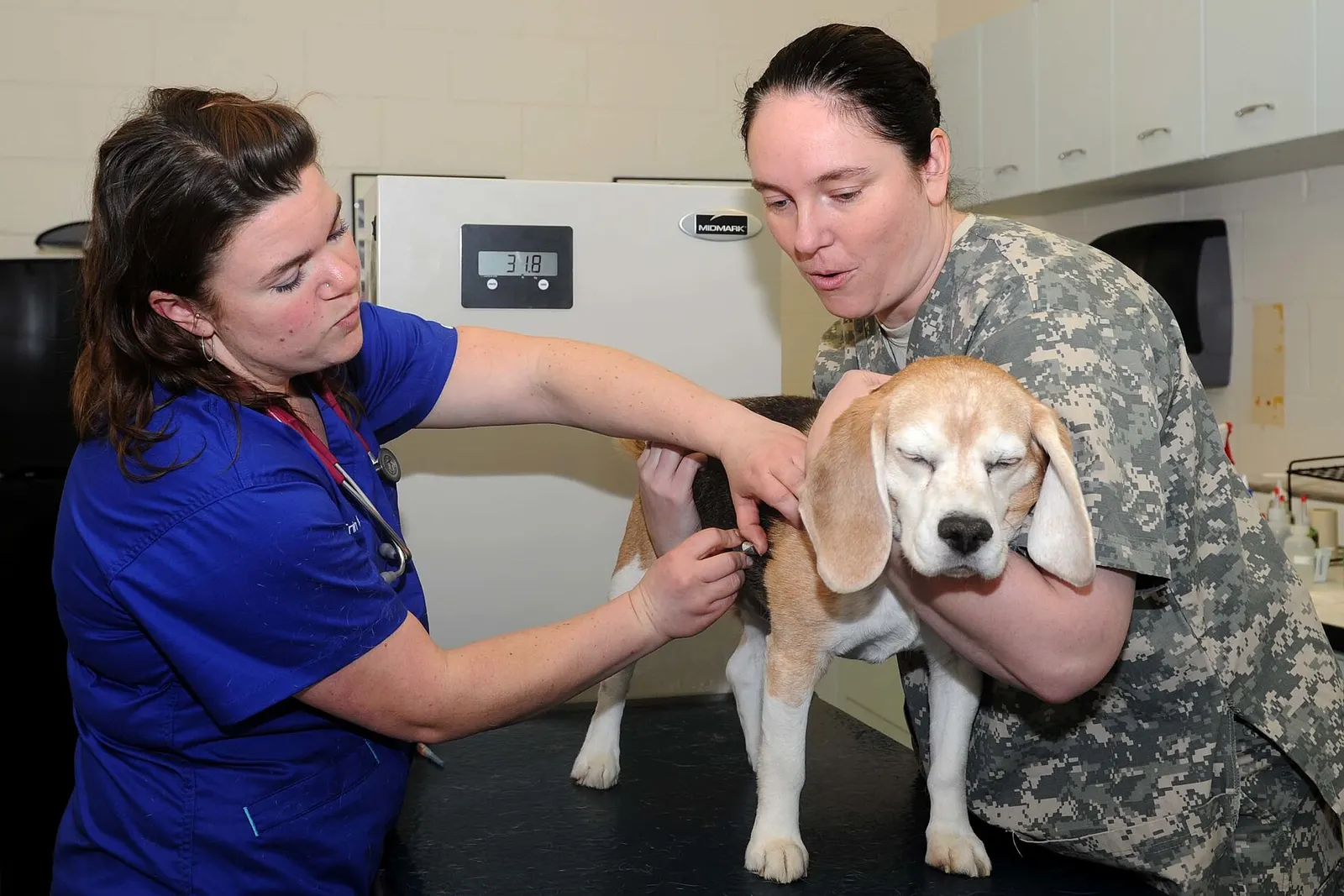
A shift, usually two to eight hours, on the treatment floor or the desk, after a short sit-down interview or instead of one. You wear scrubs, you are paired with someone (or you should be), and you do the job at whatever level you have claimed. The clinic is checking that your hands match your resume. You are checking that their equipment, staffing and manners match the ad. One tech summed up the comments under a popular interview video: every tech interview she has had "has been a working interview" and she "always worn scrubs" (YouTube). dvm360 tells managers to "use a paid working interview to observe hard skills." So it is not a trick; it is the format.
It is also the only moment in a hiring process where the information flows both ways. A posting will not tell you the clinic monitors dentals with an SpO2 clip and nothing else. A working interview will.
Is it paid, and how long should it be
Ask before the day, in one sentence: "Is the working interview paid, and how long is it?" Many clinics pay the shift at an hourly rate, some pay a flat amount, some pay nothing. Wage law on unpaid trial work depends on whether you are doing productive work the employer benefits from, and it varies by state, so we will not pretend to give you a rule. What we will say: one unpaid half-day is common and most people accept it; a full unpaid week, or a "trial" that keeps getting extended, is free labor and you should name it as such. A clinic that pays for the shift is telling you how it values staff time, which is a useful data point about everything that comes after.
What to wear
- Scrubs, clean, plain color. If the clinic has a color, nobody expects you to match it.
- Closed-toe, non-slip shoes you can stand in for eight hours. Not new ones.
- Hair tied back, nails short, no dangling earrings or necklaces, no perfume. Tattoos and colored hair are a non-issue in nearly every clinic; the rare "no visible tattoos" policy got laughed off r/VetTech ("there goes 70% of your staff," link), and if a clinic enforces one, that is information too.
- Bring a stethoscope if you own one, a pen, and a water bottle. Eat first.
What to expect, by role
Credentialed tech
- What they will ask you to do
- Place an IV catheter, draw blood (cephalic, jugular, saphenous), induce or monitor anesthesia, run a dental, take rads, calculate a drug dose, work a case with the DVM. If you are not comfortable doing something unsupervised in a strange clinic, say so and ask to watch first. That is a pass, not a fail.
- What they are watching
- Whether you are safe. Hands on the patient, aseptic habits, how you draw up and label, whether you ask about the clinic's protocol instead of assuming yours. Speed matters less than you think; the manager has seen fast techs who were sloppy.
- What you should be watching
- The monitor. If the only monitoring in surgery is an SpO2 clip, you have learned what you need to know. Capnography, BP, ECG, temperature, a warming unit. Whether the credentialed techs are doing credentialed work or holding for the DVM. Whether there is a tech per doctor or one tech for three.
- Questions for the end of the shift
- How many techs and assistants are on with how many doctors on a normal day? Who trains new techs, and for how long before you are on your own? Do techs induce and monitor here, or does the DVM? What is the CE budget in dollars, and is the license fee paid?
Assistant
- What they will ask you to do
- Restrain for exams, nail trims and blood draws. Clean kennels and the treatment floor. Set up a surgery pack, prep a patient, run a fecal, walk the boarders. Possibly watch a dental or a euthanasia. Nobody expects you to place a catheter.
- What they are watching
- Whether you ask before you touch a patient. Whether you keep your body out of the DVM's light and your hands where they need to be. Whether you keep moving at 4 p.m. when the schedule is behind and the phones are loud. Whether you can take a correction without sulking.
- What you should be watching
- Whether anyone is assigned to you or you are just following people around. How the techs talk to the assistants. Whether there is a freezer and a quiet room for euthanasias, or whether that happens in the hallway. How long the current assistants have been there; ask.
- Questions for the end of the shift
- Who trains new assistants and how long is the kennel period before I am out back? What does an assistant do here that they do not do at other clinics (blood draws, rads, anesthesia monitoring)? How many assistants are on per shift? When is the pay reviewed?
CSR
- What they will ask you to do
- Answer the phone with someone listening. Check clients in and out, take payment, schedule, take a message for the DVM, answer a cost question without quoting, handle an upset client while the lobby watches.
- What they are watching
- Tone. Whether you ask when you do not know rather than guess. Whether you can hold a line ("I can't give a diagnosis over the phone, but I can get you in at 2:40") without being cold. Whether you can type while listening.
- What you should be watching
- How many CSRs are on the desk at once. How long the hold queue gets. Whether the techs come up front to help or the desk is on its own. Whether a client who screams gets fired or gets a discount. The CSRs on Reddit are clear that this job is harder than it looks; one wrote she was "more emotionally exhausted doing this than I ever was as a tech."
- Questions for the end of the shift
- How many CSRs per shift, and what happens when one calls out? Does the practice fire abusive clients? Is there a lead CSR, and what is the path to it? Is there a phone script, or do you trust us to talk?
What to look at while you are there
You will be busy, but you will have eyes. These are the things techs say they wish they had checked, from threads where they describe discovering them after they were hired.
| Look at | Why | What good looks like |
|---|---|---|
| The anesthesia monitor | One tech's working interview found "the only monitoring equipment they used was spo2" (r/VetTech); another was asked to monitor a dental with "No BP cuff, no SPO2 clip" (r/Veterinary). | SpO2, BP, ECG, capnography, temperature, and someone actually watching them. |
| Techs per doctor on the floor today | "Essentially working one tech per doctor with a full schedule" is why one tech was looking (r/veterinaryprofession). | Two or more per DVM in GP; more in ER. Ask whether today is typical. |
| Who is training whom | "Neither of our techs really like training" was said out loud to a new hire (r/VetTech). | A named trainer, a written checklist, a length ("six weeks, then we reassess"). |
| The freezer and the comfort room | No freezer for deceased patients, or euthanasias done in treatment, tells you about volume and about respect. | A freezer, a quiet room, a process. |
| The schedule book | How many appointments per DVM today. One tech contrasted a private GP seeing "5-10 pets a day per doctor" with corporates pushing "25-30 minimum" (r/VetTech). | A number the staff can say without laughing. |
| What time people actually leave | "You'll usually miss a lunch or leave late and sometimes both" is the most common line in Banfield tech reviews on Indeed. | Ask the tech you shadow: "What time did you leave yesterday?" |
| The drug log and the controlled cabinet | Sloppy logs mean sloppy everything, and you will be the one signing them. | Locked, logged, counted. |
| How the DVM talks to the assistants | Culture is not on the website. | Names, please and thank you, corrections in private. |
Is it a good sign?
Yes, most of the time. A clinic that gives you a shift is spending staff time on you, which it would not do for a candidate it had already ruled out. Credentialed tech vacancies stay open 12.8 months on average (AAHA 2022), so a clinic that likes you has every reason to decide fast after the shift. The exceptions, all of which you can spot on the day: nobody is assigned to you; you are given real caseload with no supervision; the shift is unpaid and long; you are asked back for a second and third "trial"; or you overhear that the last three people in your role left inside a year. Any one of those is worth a direct question before you accept. Two of them is a reason to keep looking.
After the shift
Say thank you to the person who trained you, by name. Ask when you will hear. If you were paid, ask how. Then, within a day, send a short note to the manager: two sentences, what you liked on the floor, one question you did not get to ask (the ratio, the raise cadence, the CE budget). That question is the one that gets answered in writing, which is worth having. If the offer comes, our 30 questions to ask a clinic covers the rest, and the negotiating guide covers the number.
If the shift told you this is not the place, you do not owe them a reason. "Thank you for the time; I've decided to go another direction" is complete.
Questions people search for
working interview vet tech
A working interview is a shift, usually two to eight hours, where you work on the floor with the team before the clinic decides. You will be asked to restrain, draw blood, place a catheter, monitor a dental or run anesthesia depending on your level. It is normal in vet med: one tech commented that every tech interview she has had was a working interview. Go in scrubs, ask who you are shadowing, and look at the equipment while you are there.
is a working interview a good sign
Usually yes. It means the clinic is seriously considering you and wants to see hard skills rather than guess from a resume; dvm360 tells managers to use a paid working interview exactly for that. It is a bad sign only if it is unpaid and long, if nobody is assigned to you, or if it keeps getting extended. One unpaid short shift is common; a week of free labor is not an interview.
what to wear to a working interview at a vet clinic
Scrubs, clean and plain, closed-toe non-slip shoes, hair tied back, no dangling jewelry, nails short. Bring a stethoscope if you own one and a pen. If you do not own scrubs, dark pants and a plain top you can get dirty. Nobody has ever lost a working interview for wearing scrubs; people have lost them for showing up in jeans and sandals.
is a working interview paid
Sometimes. Many clinics pay for the shift at an hourly rate, some pay a flat amount, some do not pay at all. Federal and state wage law on unpaid "trial" work is messy and depends on whether you are doing productive work that benefits the employer. Ask before the day: "Is the working interview paid, and how long is it?" A clinic that pays is telling you something about how it treats staff time.
working interview vet assistant
For assistants the shift is about restraint, cleaning, setup and whether you ask before you act. You will hold for nail trims and blood draws, clean kennels, set up a surgery pack, maybe watch a dental. Nobody expects you to place a catheter. They are watching whether you move out of the way, keep your hands on the patient, and keep going when it gets loud.
working interview vet receptionist
For CSRs the shift is at the desk: answering phones with the team listening, checking clients in and out, taking a message for a DVM, handling a cost question. They are watching tone on the phone, whether you ask when you do not know, and whether you can hold a line while a client is upset. Ask how many CSRs are on the desk per shift and what the clinic does about abusive clients.
Jobs that match this guide
Pay-listed first. 7,515 open tech, assistant, CSR, kennel and manager jobs on the board, refreshed daily. No DVM listings. Every Apply goes to the clinic's own site.
Community Veterinary Partners Group
The Woodlands, TX
- $17.00 to $23.00/hr
- Part time
Community Veterinary Partners Group
Harrisburg, PA
- $15.00 to $15.50/hr
- Full time
- Urgent care
AmeriVet Veterinary Partners Group
Woodland Hills, CA
- $21.00 to $25.00/hr
- Part time
- Teaching hospital
ASPCA Nonprofit
New York, NY
- $24.00/hr
- Full time
- Shelter
- No experience needed
Community Veterinary Partners Group
Phillipsburg, NJ
- $18.00 to $26.00/hr
- Full time
- Swings
UW Veterinary Care (University of Wisconsin-Madison) University
Madison, WI
- $20.00/hr
- Full time
- ER / ECC
Sources
- dvm360: Forget everything you know about hiring (paid working interviews, red flags)
- r/VetTech: Vet clinic struggles (SpO2-only monitoring at a working interview)
- r/Veterinary: Is it normal to only monitor HR and RR during a dental
- r/VetTech: Lost first job within a month due to lack of training
- r/VetTech: Trying not to let one bad job experience get to me (green and red flags)
- r/veterinaryprofession: Is this legal? (one tech per doctor)
- Kendra the Vet Tech: 6 Tips to Nail Your Vet Tech Interview (YouTube; top comment on working interviews and scrubs)
- Kendra the Vet Tech: 6 Tips for Nailing Your Vet Tech Working Interview (YouTube)
- VTNE and Beyond: Working interview tips, vet tech (YouTube)
- AAHA NEWStat: For technician retention, money matters (time to fill, retention factors)
Pay guides are re-run each spring when the new OEWS release lands; career and credential guides are re-checked against state boards every six months. If you spot something out of date, email bynumenterprisesbe@gmail.com and we will fix it.